Title
China Program Gains Significant Momentum
Operating under the theme, “Energy Conservation is GHG Emissions Reduction” (jie neng shi jian pai), the WRI-WBCSD-CBCSD China Energy Conservation and GHG Management Program saw significant progress since its launch in June.
In September, the program partners held a cement sector working group meeting in Beijing to review feedback from Beijing Cement Company’s implementation of the WBCSD Cement Sustainability Initiative (CSI) tool. The tool was trialed in the company to develop its CO2 emissions inventory.
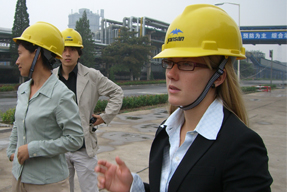
[image yansan_antonia.jpg align=right CBCSD, WBCSD, and WRI convened an oil and gas sector working group to visit Yan San Oil Refinery, which is located outside of Beijing.] An oil and gas sector working group was also convened at Sinopec’s offices in Beijing. Representatives from Sinopec, Chemchina, Beijing Yanshan Petrochemical Corporation, Jinan Oil Refinery, Qingdao Oil Refinery, and Dow Chemical attended the 1-day workshop, which introduced the SANGEA Emissions Estimating System for the oil and gas companies. Terri Shires of URS Corporation presented the tool, along with the American Petroleum Institute (API) Compendium. After Ms. Shires’ introduction, Engineer Mo of the Economic Development Division of Sinopec CPCCC facilitated a demonstration of the SANGEA tool, and initial feedback was solicited from the Chinese companies present.
The day following the working group meeting, the delegation visited Yanshan Petrochemical Corporation, which will be one of three Sinopec oil refineries to complete GHG emissions inventories using the SANGEA and API tools for the purposes of road-testing and customizing the tools.
“The sector working group meetings provided a great platform by which Chinese companies could learn about international tools and best practices for greenhouse gas accounting and management. In turn, the sessions gave the WRI and WBCSD teams valuable feedback and insight on what considerations need to be factored into account in order to customize our tools and methodologies to meet Chinese conditions,” Angel Hsu, a Research Analyst at WRI, said.
After tools and protocols are customized for the cement and oil and gas sectors in China, the program will similarly turn to the petrochemical, chemical, iron and steel, and energy sectors. Once the tools and protocols for greenhouse gas calculation and reporting are tailored and road-tested in Chinese companies, local program partners will recommend the methodologies as national standards to the Chinese government. This high-level eventual end goal will be a significant representation of international and Chinese collaboration to bring international learning and best practice to benefit Chinese companies and the global climate.
[image yansan_pankaj.jpg align=left] “The government has already addressed energy efficiency and climate change through many initiatives, and [what] we’re doing [through the program] is to facilitate the corporate implementation of these governmental policies,” said Mr. Zhai Qi, Executive Secretary of the CBCSD.WRI is also continuing to provide technical assistance to Beijing Shuoren Hitech Energy Co., Ltd. and the Energy Research Institute (ERI) of the National Development and Reform Commission (NDRC) to create a new version of their Energy Management Information System software, which will be the first software in China that will allow companies to track both energy consumption and GHG emissions according to the GHG Protocol accounting framework. The first draft of this software is expected to be ready by the end of this year.